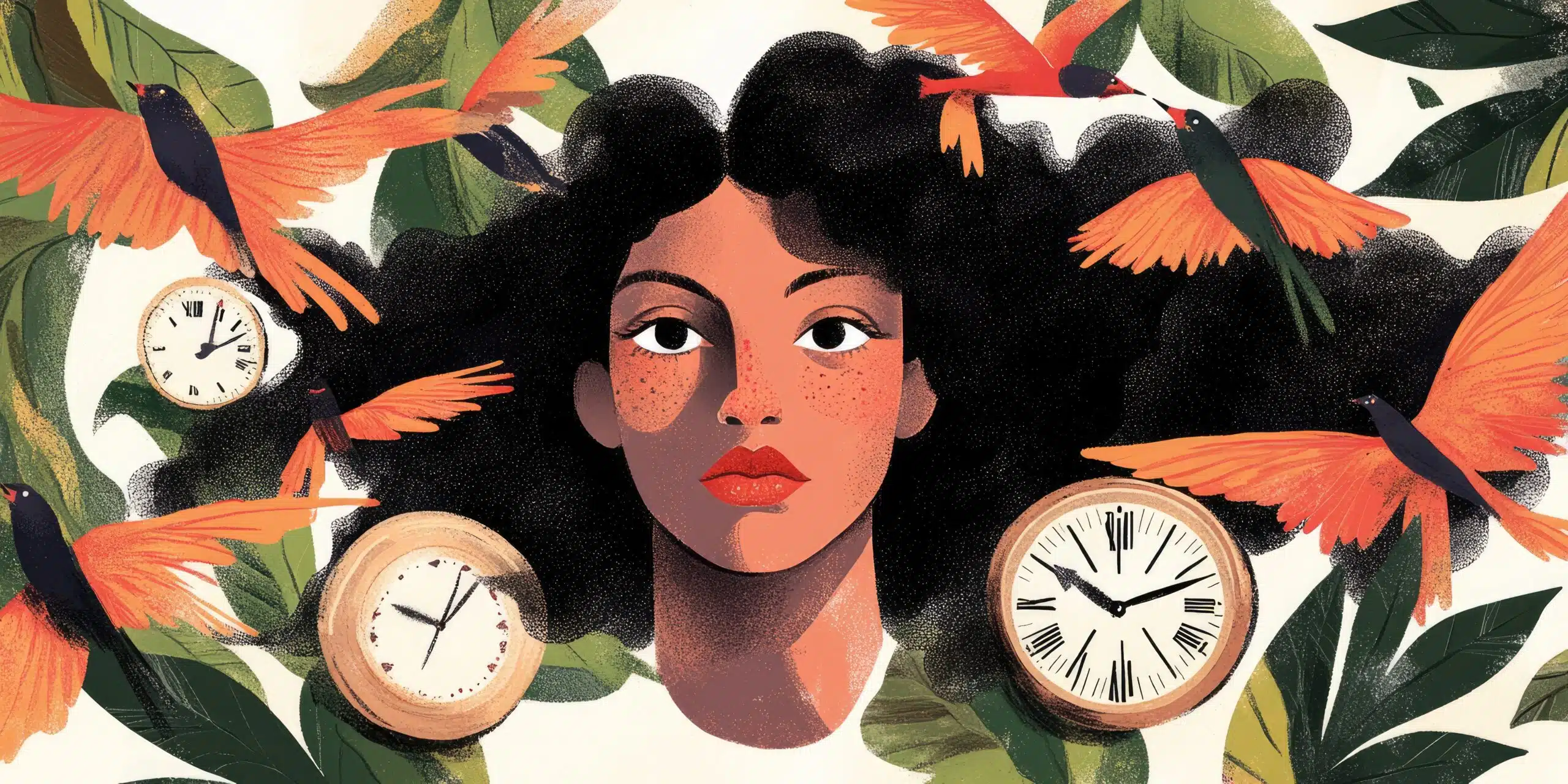
Throughout her life, a woman may live many roles. Beneath them all, the deeper self continues its quiet unfolding.
There are seasons in a woman’s life that cannot be measured only by age or by obvious milestones.
The body, imagination, dreams, and longings carry signals of this deeper movement. The inner life moves in its own rhythms, asking different questions at every stage.
While cultural narratives often describe women’s lives through marriage, a partnership, motherhood or relationships in the family, the psychological journey of a woman cannot be reduced to any single life pattern. Some women marry, some remain single, some experience divorce or separation, and others form relationships that fall outside traditional expectations. Some devote themselves to creative, intellectual or spiritual paths.
At every stage, meaningful questions emerge that relate to not only roles, but also identity, meaning, and the relationship with the self.
Early Life: An Image of Who We Should Be
As we step into adulthood, identity is often shaped through belonging. Family expectations, cultural values, and social structures influence how a woman begins to see herself. During this time many women develop an image of who they should become. What it means to be responsible, loving, capable or successful.
These ideas can provide direction, but they can also become limiting when they require us to live according to ideals that are not truly our own.
Many women spend these years learning how to adapt, achieve and care for others. Some may build relationships or families, while others are shaping careers, creative lives or independent paths. While this stage builds strength and competence, parts of the inner life may remain unexplored.
At the same time, the body itself begins its own cycles of change. The arrival of menstruation marks one of the first biological milestones in a woman’s life. From that point, the body moves through rhythms that repeat month after month. These cycles quietly shape mood, energy and perception, often long before we learn how to listen to them consciously.
The same rhythms can be understood as the inner language of our body. Many women notice that different phases of the cycle bring shifts in energy, creativity, sensitivity, and reflection. When there is space to become aware of these rhythms, the menstrual cycle can gradually become less of an ordeal to manage and more of an insight into the body’s natural intelligence.
Midlife: New Questions Emerge
For many women, midlife means a subtle turn, a rite of passage. Roles that once shaped identity begin to change. Children may grow older, relationships may shift, careers may transform, or unexpected events may interrupt familiar patterns.
For others, this period may mean different experiences. A long period of independence, the decision not to marry, the end of a relationship, or the realization that the life one has built no longer fully reflects the inner self.
At this stage, one often begins to ask deeper questions.
Who am I beneath the roles I carry?
What parts of myself have remained unheard?
What does my life truly ask of me now?
Midlife often becomes a time when attention slowly turns inward. The focus gradually shifts from building a place in the outer world to discovering a more authentic relationship with the inner self.
Marion Woodman,Jungian analyst and author, wrote with great depth about the inner life of women. She observed that many women who have lived fully through outer roles — as professionals, caregivers, achievers — eventually feel a longing for something more interior, a relationship with their own soul.
Across her writings, Woodman explored how cultural ideals of perfection can distance women from their instincts and from the feminine principle within them. In Addiction to Perfection, she argued that the compulsion to meet impossible standards is not merely a psychological habit but a kind of spiritual hunger — a search for meaning that has been misdirected. Midlife often becomes the threshold where these rigid images begin to loosen, and where a more authentic identity can begin to emerge.
This psychological shift often coincides with important changes in the body. Perimenopause gradually begins to alter hormonal rhythms, bringing fluctuations in energy, emotion, and perception. These bodily changes can sometimes feel unsettling, but accompany a deeper psychological transition toward self-knowledge and inner authority.
What may appear as uncertainty on the outside can sometimes be a woman’s inner world reorganising itself.
Later Life: Integration and Inner Authority
As life moves forward, another shift often takes place. There may be less urgency to prove oneself and more space for reflection. Experiences of joy, loss, love, and struggle weave a deeper meaning together.
Identity becomes less dependent on outer roles and more connected to inner authority. In later years, this process often brings a quiet strength. A sense that life does not need to conform to external expectations to carry meaning.
Whether a woman has lived through family life, partnership, solitude or multiple transitions, her psyche continues to seek a place where it can truly feel whole.
Listening to the Inner Life
Across the stages of life, our psyche speaks through:
- longing;
- dissatisfaction, or
- creativity, dreams or subtle shifts in the body.
The body often carries signals of these experiences long before they become clear to our mind. A sense of restlessness, a change in energy, unexpected emotions or a growing desire for stillness may all reflect the inner world asking for attention.
During therapy, when we learn to listen to these signals with curiosity rather than judgment, the body itself becomes an important guide in understanding the direction our lives are taking.
In my experience of working with women, I often see how circumstances and roles easily overshadow identity. A woman may be deeply engaged in caring for others, managing responsibilities or meeting expectations, and over time the role itself begins to define who she believes she is. It becomes easy to slip into patterns organised around these roles.
But when there is space to slowly notice the distinction between the role we carry and the deeper self that lives within it, something begins to shift.
Instead of simply performing a role, a woman begins to fully experience herself and find meaning in her life.
A Small Reflection
You might take a few quiet minutes for the following reflection.
Sit comfortably and allow your breath to settle. Allow your attention to rest on the question:
Which roles currently shape most of my daily life?
Then ask:
What parts of myself feel present within these roles?
What parts may be asking for more space or expression?
You don’t need to find quick answers.
Simply noticing these questions can sometimes open up a deeper conversation with your inner life.
If you pause and look back at the years, you may notice:
- At times life asks us to build and establish ourselves in the world.
- At other times it asks us to question what we have built and to listen more deeply.
- And sometimes it invites us simply to witness our experiences with patience and understanding.
When we allow space to listen, it can become a steady anchor through the different seasons of our lives.
Disclaimer
The content shared on this blog is intended for informational and reflective purposes only.
While it draws on professional training and clinical experience as a therapist, it does not constitute therapy, counselling, psychological advice, diagnosis, or treatment of any kind. Reading this blog does not establish a therapist-client relationship.
The reflections here sit at the intersection of depth psychology, somatic awareness, and inner inquiry, and are offered in the spirit of exploration rather than prescription.
If you are navigating emotional difficulty or mental health concerns, please reach out to a qualified mental health professional for personalised support.
Other Reads